ETC Evidence To Convict | Practicing Evangelizing
REVIVAL WAITS ON THE HOLINESS OF GOD'S PEOPLE | ALS 1 Peter 2 | 1 Cor 7 | 2 Cor 5


TO LISTEN, CLICK HERE -> LOVING GOD, LOVING EACH OTHER
LOVING EACH OTHER, AS I HAVE LOVED YOU, JOHN 13:34
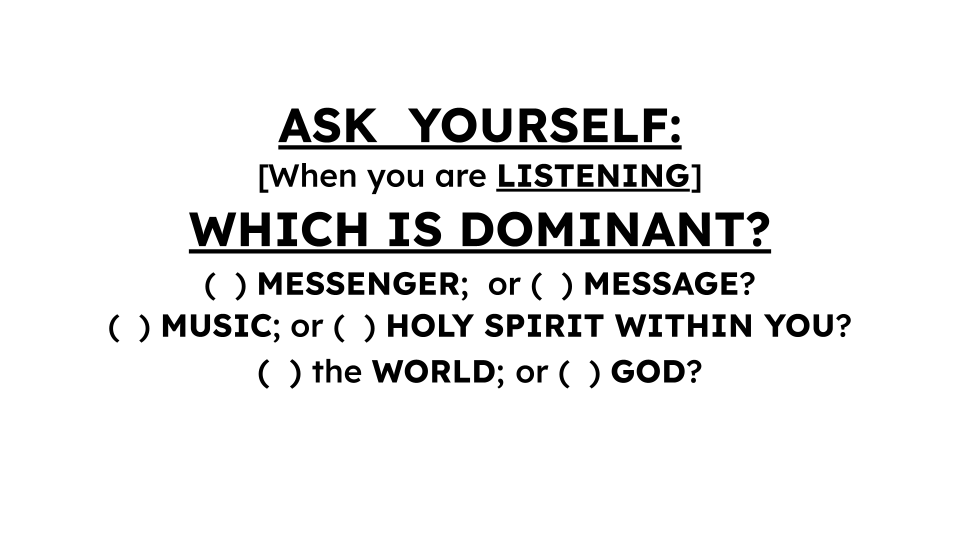
EARRRS TO HEAR: PRACTICING
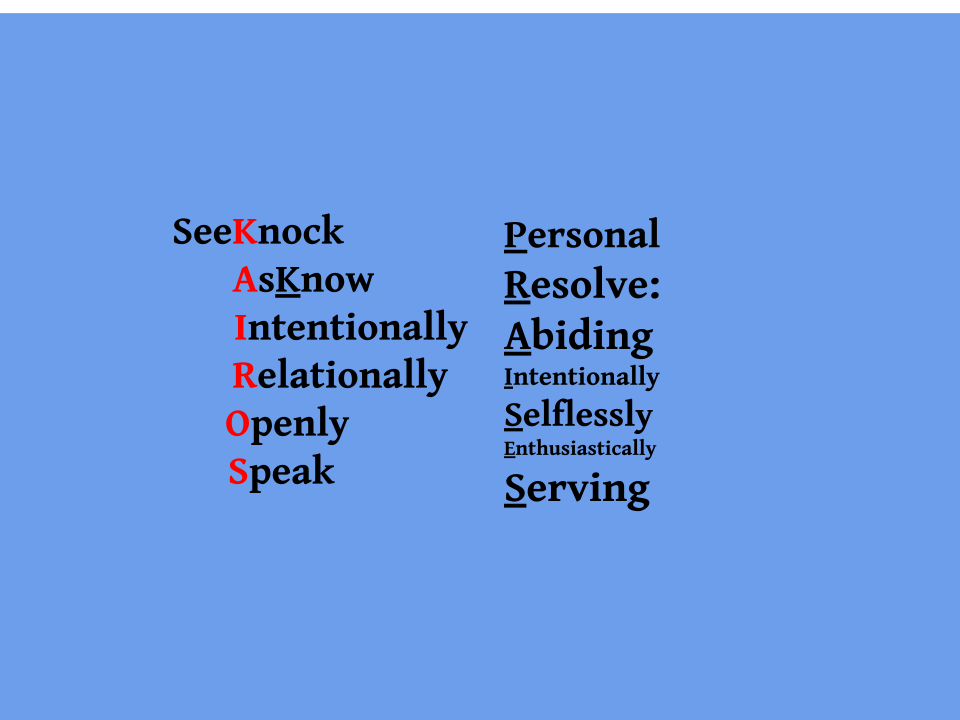
Evangelizing Awe-inspiring Reading-Realizing-Reckoning Singers
Honoring Encouraging Abiding Resolving
Helping Hands and Feet: THE PHYSICIAN'S EVANGELISTS [PE]
1 Corinthians 6:16-20 KJV
[16] What? know ye not that he which is joined to an harlot
is one body? for two, saith he, shall be one flesh.
[17] But he that is joined unto the Lord is one spirit.
[18] Flee fornication. Every sin that a man doeth is
without the body; but he that committeth fornication
sinneth against his own body. [19] What? know ye not
that your body is the temple of the Holy Ghost
which is in you, which ye have of God,
and ye are not your own? [20] For ye are bought
with a price: therefore glorify God in your body,
and in your spirit, which are God's.
TEM'PLE, n. [L. templum.]
1. A public edifice erected in honor of some deity.
Among pagans, a building erected to some pretended
deity, and in which the people assembled to worship.
Originally, temples were open places, as the Stonehenge
in England. In Rome, some of the temples were open,
and called sacella; others were roofed, and called oedes.
The most celebrated of the ancient pagan temples were
that of Belus in Babylon, that of Vulcan at Memphis, that
of Jupiter at Thebes, that of Diana at Ephesus, that of
Apollo in Miletus,that of Jupiter Olympius in Athens, and
that of Apollo at Delphi. The most celebrated and
magnificent temple erected to the true God, was that built
by Solomon in Jerusalem. In Scripture, the tabernacle is
sometimes called by this name. 1 Sam. 1-3.
2. A church; an edifice erected among christians as a place
of public worship. Can he whose life is a perpetual insult to the authority of God, enter with any pleasure a temple consecrated
to devotion and sanctified by prayer?
3. A place in which the divine presence specially resides;
the church as a collective body. Eph.2.
4. In England,the Temples are two inns of court, thus called
because anciently the dwellings of the knights Templars.
They are called the Inner and the Middle Temple.
TEM'PLE, n. [L. tempus, tempora. The primary sense of the
root of this word is to fall. See Time.]
1. Literally, the fall of the head; the part where the head
slopes from the top.
2. In anatomy, the anterior and lateral part of the head,
where the skull is covered by the temporal muscles.
TEM'PLE, v.t. To build a temple for; to appropriate a
temple to. [Little used.]
TIME, n. [L.tempus; tempora, the falls of the head,
also tempest, &c. See Tempest. Time is primarily equivalent
to season; to the Gr.wpa in its original sense, opportunity,
occasion, a fall, an event, that which comes.]
1. A particular portion or part of duration, whether past,
present or future. The time was; the time has been; the time
is; the time will be. Lost time is never found again.
God, who at sundry times, and in divers manners, spoke
in time past to the fathers by the prophets. Heb.1.
2. A proper time; a season.
There is a time to every purpose. Eccles.3.
The time of figs was not yet. Mark 11.
3. Duration.
The equal and uniform flux of time does not affect
our senses. Time is absolute or relative; absolute time
is considered without any relation to bodies or their
motions. Relative time is the sensible measure of any
portion of duration, by means of motion. Thus the
diurnal revolution of the sun measures a space of time
or duration. Hence,
4. A space or measured portion of duration.
We were in Paris two months,and all that time enjoyed
good health.
5. Life or duration, in reference to occupation. One man
spends his time in idleness; another devotes all his time
to useful purposes. Believe me, your time is not your own;
it belongs to God, to religion, to mankind.
6. Age; a part of duration distinct from other parts; as
ancient times; modern times. The Spanish armada was
defeated in the time of Queen Elizabeth.
7. Hour of travail.
She was within one month of her time.
8. Repetition; repeated performance, or mention with
reference to repetition. The physician visits his patient
three times in a day.
9. Repetition; doubling; addition of a number to itself;
as, to double cloth four times; four times four amount
to sixteen.
10. Measure of sounds in music; as common time, and
treble time. In concerts,it is all important, that the
performers keep time, or exact time.
11. The state of things at a particular period; as when
we say, good times, or bad times, hard times,dull times
for trade, &c. In this sense, the plural is generally used.
12. In grammar, tense. In time, in good season; sufficiently
early. He arrived in time to see the exhibition.
1. A considerable space of duration; process or continuation
of duration. You must wait patiently; you will in time recover
your health and strength. At times, at distinct intervals of
duration. At times he reads; at other times, he rides. The spirit began to move him at times. Judges 13. Time enough, in season; early enough. Stanley at Bosworth-field, came time enough to save his life. To lose time, to delay.
1. To go too slow; as, a watch or clock loses time.
Apparent time, in astronomy, true solar time, regulated by the apparent motions of the sun.
Mean time, equated time, a mean or average of apparent time.
Siderial time, is that which is shown by the diurnal revolutions of the stars.
TIME, v.t. To adapt to the time or occasion; to bring, begin or perform at the proper season or time; as, the measure is well timed, or ill timed. No small part of political wisdom consists in knowing how to time propositions and measures.
Mercy is good, but kings mistake its timing.
1. To regulate as to time; as, he timed the stroke.
2. To measure; as in music or harmony.
READ, n. [See the Verb.]
1. Counsel. [Obs.]
2. Saying; sentence. Obs.
READ, v.t. The preterit and pp. read, is pronounced red. [Gr. to say or tell, to flow; a speaker, a rhetorician. The primary sense of read is to speak, to utter, that is, to push, drive or advance. This is also the primary sense of ready, that is, prompt or advancing, quick. L. gratia, the primary sense of which is prompt to favor, advancing towards, free. The elements of these words are the same as those of ride and L. gradior, &c. The sense of reason is secondary, that which is uttered, said or set forth; hence counsel also. See Ready.]
1. To utter or pronounce written or printed words, letters or characters in the proper order; to repeat the names or utter the sounds customarily annexed to words, letters or characters; as, to read a written or printed discourse; to read the letters of an alphabet; to read figures; to read the notes of music, or to read music.
2. To inspect and understand words or characters; to peruse silently; as, to read a paper or letter without uttering the words; to read to one's self.
3. To discover or understand by characters, marks or features; as, to read a man's thoughts in his countenance.
To read the interior structure of the globe.
An armed corse did lie, in whose dead face he read great magnanimity.
4. To learn by observation.
Those about her from her shall read the perfect ways of honor.
5. To know fully.
Who is't can read a woman?
6. To suppose; to guess. Obs.
7. To advise. Obs.
READ, v.i.
1. To perform the act of reading.
So they read in the book of the law of God distinctly, and gave the sense. Neh. 8.
2. To be studious; to practice much reading.
It is sure that Fleury roads.
3. To learn by reading.
I have read of an eastern king who put a judge to death for an iniquitous sentence.
4. To tell; to declare. [Not in use.]
READ, pp. red.
1. Uttered; pronounced, as written words in the proper order; as, the letter was read to the family.
2. Silently perused.
READ, a. red. Instructed or knowing by reading; versed in books; learned. Well read is the phrase commonly used; as well read in history; well read in the classics.
A poet well read in Longinus -
RE'ADING, ppr.
1. Pronouncing or perusing written or printed words or characters of a book or writing.
2. Discovering by marks; understanding.
RE'ADING, n.
1. The act of reading; perusal.
2. Study of books; as a man of extensive reading.
3. A lecture or prelection.
4. Public recital.
The Jews had their weekly readings of the law.
5. In criticism, the manner of reading the manuscripts of ancient authors, where the words or letters are obscure. No small part of the business of critics is to settle the true reading, or real words used by the author; and the various readings of different critics are often perplexing.
6. A commentary or gloss on a law, text or passage.
7. In legislation, the formal recital of a bill by the proper officer, before the house which is to consider it. In Congress and in the state legislatures, a bill must usually have three several readings on different days, before it can be passed into a law.
RE'ALIZE, v.t.
1. To bring into being or act; as, to realize a scheme or project.
We realize what Archimedes had only in hypothesis, weighing a single grain of sand against the globe of earth.
2. To convert money into land, or personal into real estate.
3. To impress on the mind as a reality; to believe, consider or treat as real. How little do men in full health realize their frailty and mortality.
Let the sincere christian realize the closing sentiment.
4. To bring home to one's own case or experience; to consider as one's own; to feel in all its force. Who, at his fire side, can realize the distress of shipwrecked mariners?
This allusion must have had enhanced strength and beauty to the eye of a nation extensively devoted to a pastoral life, and therefore realizing all its fine scenes and the tender emotions to which they gave birth.
5. To bring into actual existence and possession; to render tangible or effective. He never realized much profit from his trade or speculations.
RE'ALIZING, ppr.
1. Bringing into actual being; converting into real estate; impressing as a reality; feeling as one's own or in its real force; rendering tangible or effective.
2. a. That makes real, or that brings home as a reality; as a realizing view of eternity.
RECKON, v.t. rek'n. [L. rego, rectus, whence regnum, regno, Eng. to reign and right.]
1. To count; to number; that is, to tell the particulars.
The priest shall reckon to him the money, according to the years that remain, even to the year of jubilee, and it shall be abated. Lev. 27.
I reckoned above two hundred and fifty on the outside of the church.
2. To esteem; to account; to repute. Rom. 8.
For him I reckon not in high estate.
3. To repute; to set in the number or rank of.
He was reckoned among the transgressors. Luke 22.
4. To assign in an account. rom. 4.
5. to compute; to calculate.
RECKONING, ppr. rek'ning. Counting; computing; esteeming; reputing; stating an account mutually.
LIFE LESSONS LEARNED:
EPHESIANS: SIT, WALK, STAND.
Sit/Spiritual/Quiet Talks/Pray/Worship
Physical/Being/Body/Church/PRAISES
Educate/Teach/Read/Realize/Reckon
Walk/Word/Do/Finance/Work
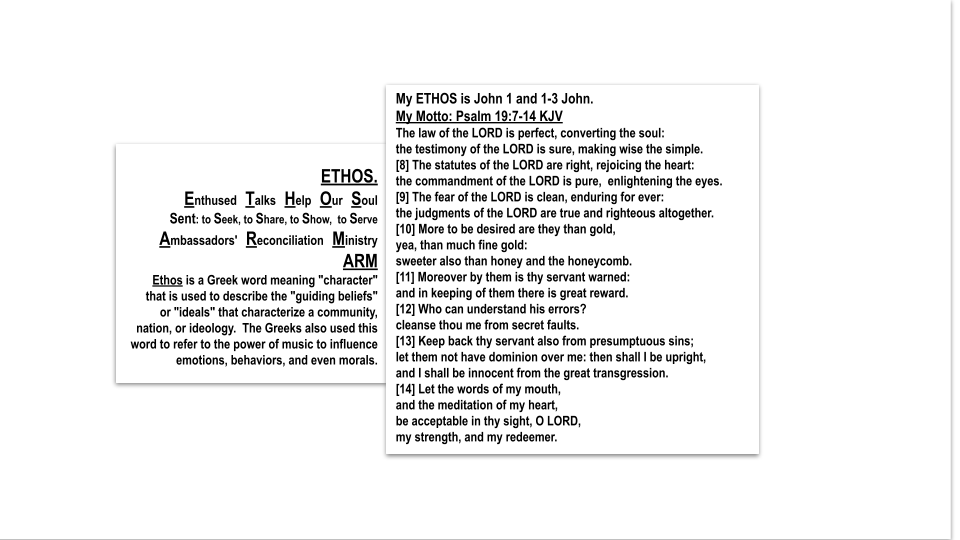
Stand/Be/TIP/AIM/ARM/ALL-AWE
Matthew 13:58 KJV
And he did not many mighty works there
because of their unbelief.
Mark 4:21-29 TLB
[21] Then he asked them, "When someone lights a lamp,
does he put a box over it to shut out the light?
Of course not! The light couldn't be seen or used.
A lamp is placed on a stand to shine and be useful. |
[22] "All that is now hidden will someday come to light.
[23] If you have ears, listen!
[24] And be sure to put into practice what you hear.
The more you do this, the more you will understand what I tell you.
[25] To him who has shall be given;
from him who has not shall be taken away even what he has.
Gospel account found only in Mark: Mark 4:26-29 TLB
"Here is another story illustrating what the Kingdom of God is like:
"A farmer sowed his field [27] and went away, and as the days went by,
the seeds grew and grew without his help.
[28] For the soil made the seeds grow.
First a leaf blade pushed through, and later the heads of wheat formed,
and finally the grain ripened, [29] and then the farmer came
at once with his sickle and harvested it."
Downloads
- AIM-101_ALL_AWE.pdf
- AIM-101 TELLING YOUR STORY.pdf
- LINKS_ HAROLD HENDERSON AUDIOS .pdf
- In God We Trust.pdf
- OurDoctrine2023_FINAL.pdf
- 20261011 bulletins.pdf
- 20261011 PRAYING - LUKE 11 .pdf
- 20261004 bulletins.pdf
- 20260927 bulletins.pdf
- 20260920 bulletins.pdf
- 20260913 bulletin.pdf
- 20260906 bulletins.pdf
- 20260830 bulletin.pdf
- 20260823 bulletins.pdf
- 20260816 bulletins.pdf
- 20260809 bulletin.pdf
- 20260802 bulletins.pdf
- 20260725gmailEvangelizing.pdf
- 20260726-08 bulletin.pdf
- 20260719 bulletin.pdf
- 20260712 bulletins.pdf
- 20260705 bulletins.pdf
- 20260628 bulletins.pdf
- practice in John.pdf
- practice in Acts.pdf
- practice in Galatians.pdf
- practice in 1 John.pdf
- sit in Eph.pdf
- walk in Eph.pdf
- stand in Eph.pdf
- CAUGHT NOT TAUGHT.pdf